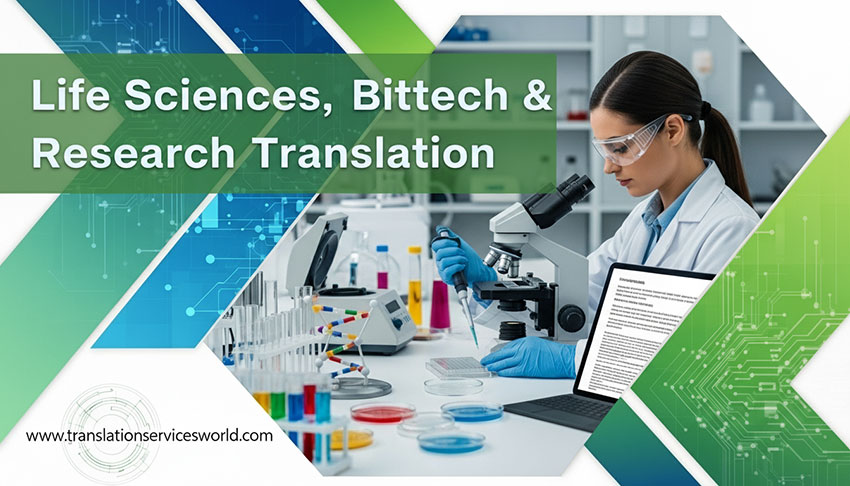
Life Sciences, Biotech & Research Translation
Specialised translations for biotech, research institutes and life sciences organisations.
We help life sciences organisations share research, data and innovations with global audiences.
Life sciences projects involve complex terminology, detailed data and strict publication standards. Our translators work on scientific papers, study protocols, posters, conference materials and communication between research partners. Clients include universities, research institutes, biotech companies and health organisations. We aim to preserve scientific accuracy while making texts clear and readable for reviewers, collaborators and wider stakeholders. Where needed, we also help adapt summaries and communication materials for non technical audiences such as patients, investors and policy makers.


Typical documents we translate in Life Sciences.
Below are some of the common document types we handle for clients in this sector. If your materials are slightly different, share a sample and we will confirm the best workflow and turnaround times.
- Scientific articles and conference papers
- Study protocols and research proposals
- Posters and presentation materials
- Research reports and white papers
- Communication with partners and funders
- Lay summaries and public engagement content
Typical challenges in Life Sciences localisation.
Every industry has its own terminology, stakeholder expectations and risk profile. We design our workflows around these realities so translations work in practice, not just on paper.
- Translating research-heavy scientific terminology.
- Maintaining absolute accuracy in clinical trial materials.
- Complying with EMA, FDA and global regulations.
- Ensuring readability for both experts and patients.
How a typical Life Sciences translation project works.
Whether you send a single document or a full campaign, we follow a structured workflow so you know exactly what will happen from first file to final delivery.
Why TranslationServicesWorld.com for Life Sciences?
We combine sector expertise with carefully managed translation workflows, so your teams can rely on the final texts without re-checking every line. Our goal is to become a long-term partner for your organisation rather than just a one-off vendor.
Our translation workflow tailored to Life Sciences.
Different industries require different workflows. For this sector, we focus on accuracy, traceability and confidentiality at every stage while still keeping the process simple for your internal teams.
Quality assurance & review stages
For many projects we recommend a translation plus independent review workflow. For high-risk or high-visibility content, we can add an extra clarity and consistency stage.
Example projects in Life Sciences.
Here are a few examples of how clients in this field use our translation services. Details are anonymised, but they illustrate typical scopes, languages and outcomes.
-
 Multilingual research project
 -
 Conference abstract and poster support
Send us a sample document or brief and we will propose a practical plan, cost and timeline.