In today’s globalized legal environment, international law firms operate across multiple jurisdictions, languages, and legal systems. Whether handling cross-border litigation, international arbitration, mergers and acquisitions, or immigration matters, legal professionals frequently deal with multilingual documentation. This is where legal translation services become not just helpful—but absolutely essential.
Legal translation is far more than converting words from one language to another. It is a highly specialized discipline that requires deep knowledge of legal terminology, jurisdictional nuances, and cultural context. A single mistranslation can alter the meaning of a clause, shift liability, or even invalidate an entire contract.
This comprehensive guide explores everything international law firms need to know about legal translation services, including their importance, types, processes, challenges, and how to choose the right provider.
What Are Legal Translation Services?
Legal translation services involve the accurate translation of legal documents, contracts, and texts from one language to another while preserving their original meaning, intent, and legal validity.
Unlike general translation, legal translation requires:
- Expertise in legal systems
- Knowledge of legal terminology
- Understanding of jurisdiction-specific laws
- Precision and consistency in language
Legal translators must ensure that the translated document carries the same legal weight as the original. This is critical in international law, where documents are often used in courts, regulatory bodies, and official proceedings.
Why Legal Translation Services Are Critical for International Law Firms
- Ensuring Legal Accuracy and Validity
Legal language is complex and highly sensitive. Even a minor error can lead to:
- Contract disputes
- Financial losses
- Regulatory penalties
- Litigation risks
A mistranslated clause can completely change obligations or rights within a contract.
- Supporting Cross-Border Legal Operations
International law firms handle cases involving multiple countries. Legal translation enables:
- Clear communication between parties
- Accurate documentation across jurisdictions
- Smooth legal proceedings
Without proper translation, legal processes can break down due to misunderstandings.
- Compliance with International Regulations
Many legal and governmental authorities require certified translations for:
- Court submissions
- Immigration documents
- Corporate filings
- Regulatory compliance
Failure to provide accurate translations can result in rejected applications or legal delays.
- Facilitating International Dispute Resolution
In arbitration and litigation, translated documents such as evidence, witness statements, and judgments must be precise and legally valid.
- Enabling Global Business Transactions
Legal translation plays a key role in:
- International contracts
- Joint ventures
- Mergers and acquisitions
- Intellectual property filings
It ensures all parties understand the terms equally, regardless of language differences.
Types of Legal Documents That Require Translation
International law firms deal with a wide range of documents requiring translation, including:
Corporate and Commercial Documents
- Contracts and agreements
- Partnership deeds
- Shareholder agreements
- Terms and conditions
Litigation and Court Documents
- Court filings
- Judgments
- Depositions
- Evidence and exhibits
Immigration Documents
- Birth certificates
- Marriage certificates
- Visa applications
- Work permits
Intellectual Property Documents
- Patent applications
- Trademark registrations
- Copyright filings
Financial and Regulatory Documents
- Audit reports
- Compliance documents
- Financial statements
- Licensing agreements
Legal translation providers often handle hundreds of document types across industries, ensuring accuracy and consistency.
Certified vs. Sworn vs. Standard Legal Translation
Understanding different types of legal translation is crucial for law firms.
Certified Translation
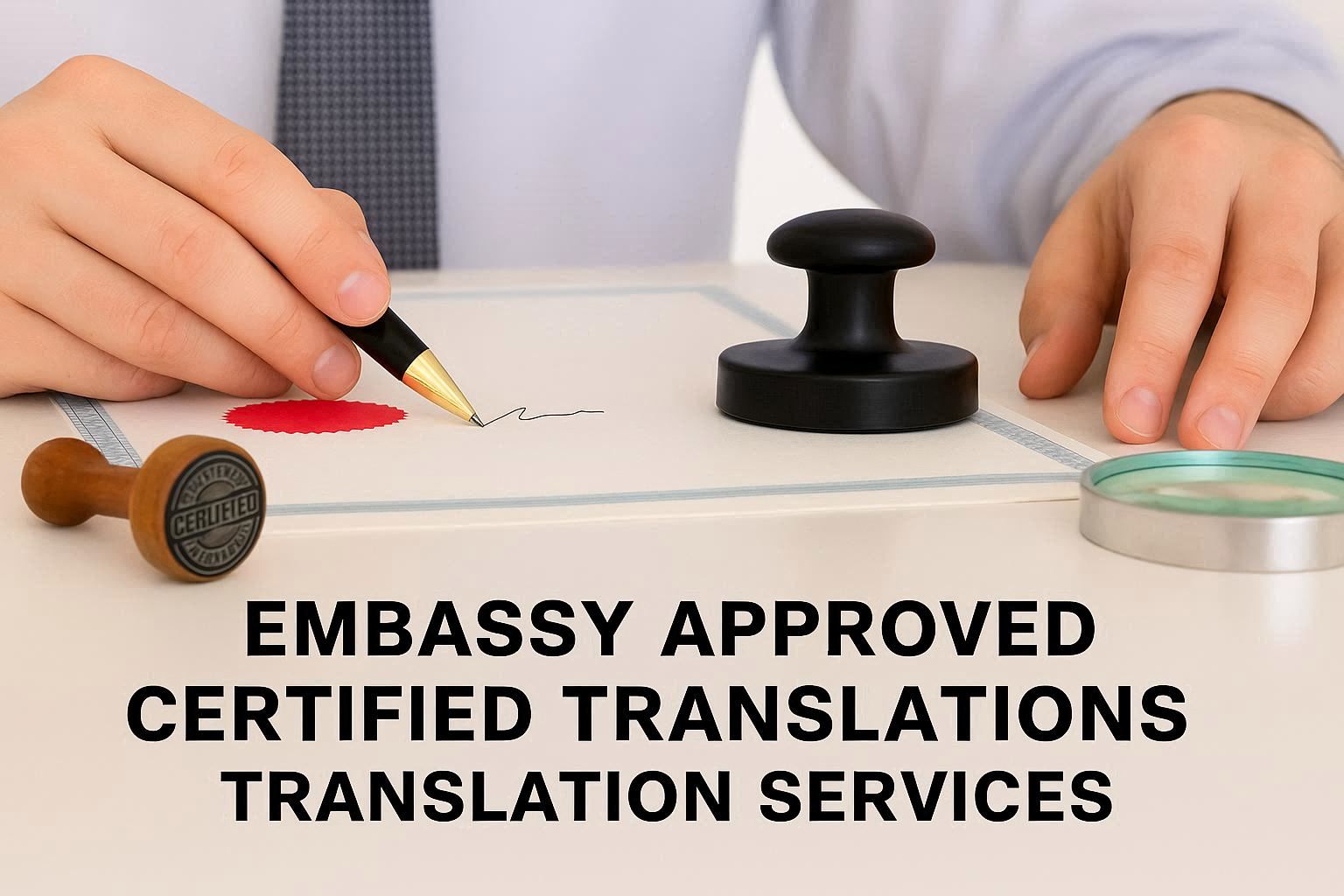
A certified translation includes a signed statement confirming that the translation is accurate and complete. It is often required for:
- Courts
- Immigration authorities
- Government agencies
Sworn Translation
Performed by a translator authorized by a government authority, sworn translations are legally valid in certain jurisdictions, especially in Europe and Latin America.
Standard Legal Translation
Used for internal purposes or non-official documents, but still requires high accuracy.
Certified and sworn translations are essential in international legal work where documents must be legally recognized.
Key Features of Professional Legal Translation Services
- Subject-Matter Expertise
Legal translators must understand various legal domains such as:
- Corporate law
- Tax law
- Intellectual property
- Employment law
This ensures accurate interpretation of complex legal concepts.
- Multilingual Capabilities
Top providers offer translation in 100+ languages, enabling global reach for law firms.
- Quality Assurance Processes
Professional agencies use:
- Multiple review stages
- Legal proofreading
- Terminology consistency checks
- Confidentiality and Data Security
Legal documents are highly sensitive. Reliable providers ensure:
- Non-disclosure agreements (NDAs)
- Secure file handling
- Data protection compliance
- Fast Turnaround Times
Legal matters are often time-sensitive. Translation services must deliver accurate results within strict deadlines.
Legal Translation vs. General Translation
Feature | Legal Translation | General Translation |
Complexity | Very high | Moderate |
Accuracy Requirement | Absolute | Flexible |
Subject Expertise | Mandatory | Optional |
Legal Consequences | Severe | Minimal |
Certification | Often required | Rarely required |
Legal translation is a specialized field requiring far more precision and expertise than general translation.
Challenges in Legal Translation for International Law Firms
- Differences in Legal Systems
Legal systems vary widely (e.g., common law vs. civil law). Translators must understand both systems to ensure accurate interpretation.
- Untranslatable Legal Terms
Some legal terms have no direct equivalent in another language, requiring careful adaptation without altering meaning.
- Maintaining Consistency
Large legal projects involve thousands of documents. Consistency in terminology is critical.
- Cultural and Linguistic Nuances
Cultural differences can affect how legal concepts are understood, making localization essential.
- Tight Deadlines
Law firms often require urgent translations, especially during litigation or negotiations.
The Role of Technology in Legal Translation
Modern legal translation services use advanced technologies to improve efficiency and accuracy:
Translation Memory (TM)
Stores previously translated content for consistency across documents.
Computer-Assisted Translation (CAT) Tools
Help translators manage large volumes of text efficiently.
AI and Machine Translation
Useful for initial drafts but not suitable for final legal documents, as they lack legal understanding and certification.
Industries That Rely on Legal Translation Services
Legal translation is essential across multiple sectors, including:
- Banking and finance
- Real estate
- Healthcare and pharmaceuticals
- Technology
- Government and public sector
These industries frequently engage in cross-border transactions requiring precise legal documentation.
How International Law Firms Use Legal Translation Services
- Cross-Border Litigation
Translating evidence, testimonies, and court documents for international cases.
- Mergers and Acquisitions (M&A)
Ensuring contracts and agreements are accurately translated for all parties.
- Immigration Law
Handling multilingual documentation for clients relocating internationally.
- Arbitration and Dispute Resolution
Providing accurate translations for arbitration proceedings and legal disputes.
- Regulatory Compliance
Ensuring documents meet legal requirements in different jurisdictions.
Benefits of Professional Legal Translation Services
- Accuracy and reliability
- Legal compliance
- Risk reduction
- Improved communication
- Global business expansion
Legal translation enables law firms to operate confidently in international markets while minimizing risks.
How to Choose the Right Legal Translation Provider
When selecting a legal translation service, international law firms should consider:
- Legal Expertise
Ensure translators have legal backgrounds or specialized training.
- Certification Capabilities
Check if the provider offers certified and sworn translations.
- Language Coverage
Choose a provider with extensive multilingual capabilities.
- Quality Assurance
Look for robust review and proofreading processes.
- Confidentiality Standards
Verify data protection and confidentiality measures.
- Industry Experience
Prefer providers with experience working with law firms and legal departments.
Why Machine Translation Is Not Enough
While AI tools are improving, they cannot replace human legal translators because:
- They lack understanding of legal nuance
- They cannot provide certified translations
- They may introduce critical errors
Legal translation requires human expertise to ensure accuracy and legal validity.
The Future of Legal Translation Services
The demand for legal translation services is expected to grow due to:
- Increasing globalization
- Rise in cross-border transactions
- Expansion of international law firms
- Growth in international arbitration
Technology will continue to assist, but human expertise will remain essential.
Legal translation services are a cornerstone of international legal practice. For international law firms, they are not just a support function but a strategic necessity.
From ensuring compliance and reducing risk to enabling global transactions and facilitating justice across borders, legal translation plays a critical role in modern law.
Choosing the right legal translation partner can make the difference between success and costly legal complications. By investing in professional, certified legal translation services, international law firms can confidently navigate the complexities of multilingual legal environments and deliver exceptional results for their clients.
If your law firm handles international cases, contracts, or clients, investing in expert legal translation services is not optional—it’s essential for accuracy, compliance, and success in the global legal landscape.