When dealing with international legal processes, immigration, education, business contracts, or official documentation in Europe, understanding translation standards is essential. Two terms often used sworn translation and certified translation services — are sometimes misunderstood or used interchangeably. However, they serve different purposes and follow different legal frameworks depending on the European country.
Definitions: What Do These Terms Mean?
Before we compare, it’s vital to define both terms clearly.
What Is a Sworn Translation?
A sworn translation (sometimes called affidavit translation or notarized translation) is a translation that carries legal force in a specific jurisdiction. It is performed by a translator who is authorized, accredited, or officially recognized by a government body or legal authority in that country.
A sworn translation:
✔ Is legally binding
✔ Can be submitted to courts, government agencies, and official institutions
✔ Often involves a signature and seal by the translator
✔ May include an oath taken before a legal authority
Key point:
Sworn translations are government‑authorized — the translator must be approved by the state.
What Is a Certified Translation?
A certified translation is a translation accompanied by a signed statement from the translator (or translation provider) confirming that the translation is accurate and complete to the best of their knowledge.
A certified translation:
✔ Includes a certification statement
✔ Is performed by a professional translator
✔ Is accepted by many institutions
However, unlike sworn translations, certified translations are not always recognized as legally binding in every European country.
They are typically accepted by:
- University admissions offices
- Some immigration departments
- Employers
- Commercial institutions
But they may not be sufficient for courts, police authorities, property registries, or legal proceedings in all countries.
Key Differences at a Glance
|
Feature |
Sworn Translation |
Certified Translation |
|
Legal Authority |
Translator appointed by court or government |
Translator self‑certifies accuracy |
|
Legal Status |
Legally binding |
May or may not be accepted by legal bodies |
|
Issued By |
Sworn/authorized translator |
Professional translator/agency |
|
Includes |
Signature + seal + oath |
Certification statement |
|
Recognition |
Required for official/legal procedures |
Accepted in many administrative contexts |
Why This Distinction Matters in Europe
Europe is not a single legal system — each country governs translation standards differently. What counts as “certified” in one country might not be legally valid in another.
For example:
- Spain generally requires sworn (jurado) translators for official use.
- Germany recognizes publicly appointed and sworn translators (beeidigte Übersetzer).
- France uses expert french translators (traducteur expertisé) with a court stamp for legal purposes.
- UK and Ireland do not have sworn translators by default — they rely on certified translations with notarization.
So, anyone dealing with documents across borders in Europe must understand these nuances.
Sworn vs Certified Translation: Detailed Breakdown
Legal Recognition
Sworn Translation:
- Officially recognized by courts
- May be required for visas document translation, immigration translation services, legal filings
- Usually required for document legalization
Certified Translation:
- Recognized for educational and some administrative purposes
- Might be accepted by immigration departments (e.g., student visa applications)
- Not always valid for legal proceedings
Who Can Perform Them?
Sworn Translation:
- Must be a government‑authorized translator
- Often registered with a judicial or governmental body
- May require approval by ministry or court
Certified Translation:
- Performed by a professional translator
- Can be issued by a translation company
- Does not require government authorization
What Do They Include?
Sworn Translation:
- Translator’s signature
- Official stamp or seal
- Certification clause
- Sometimes sworn under oath
Certified Translation:
- Translator’s statement of accuracy
- Translator’s signature
- Date and contact details
- May include agency letterhead
Country‑by‑Country Snapshot
Europe consists of many legal jurisdictions — and here’s how sworn and certified Europe translation services differ in key countries:
Spain
In Spain:
- Sworn Translation (Traducción Jurada) is mandatory for official documents (e.g., birth certificates translation, academic degrees translation, contracts).
- Only certified translators authorized by the Spanish Ministry of Foreign Affairs can sign these.
- Certified translations alone are not accepted for legal procedures.
Common Uses:
✔ Court submissions
✔ Immigration papers
✔ Public administration requirements
Germany
Germany requires:
- Sworn / Publicly Appointed Translators (Beeidigte Übersetzer)
They are sworn before a regional court (Landgericht).
Sworn translations must include:
- Translator’s stamp
- Signature
- Court‑appointed credentials
Certified translations may be accepted by some agencies but are not valid for legal matters such as:
✘ Court submissions
✘ Police reports
✘ Notarial purposes
France
France uses:
- Traducteur Expertisé (court‑approved translator)
This translator:
✔ Is approved by a court
✔ Provides translations with a certification clause
✔ Translation carries legal weight
Certified translations from an ordinary translator may be accepted by certain institutions but not for legal processes like police or official court matters.
Italy
Italy requires formal sworn translations for:
🔹 Official documents
🔹 Court use
🔹 Government applications
Sworn translators are registered and may be approved by:
✔ Court system
✔ Municipality authorities
Certified translation is less formal and often insufficient for legal requirements.
United Kingdom & Ireland
Important note:
The UK and Ireland do not maintain official sworn translator lists.
Instead:
✔ Translators provide certified translations
✔ Sometimes a notarized signature or apostille is added
For UK applications (e.g., visas, courts), a certified translation may be acceptable, particularly if notarized.
Netherlands
In the Netherlands:
- Sworn translators are recognized by the Ministry of Justice.
- Their translations are valid for legal and official purposes.
Certified translations without this approval might be rejected by government bodies.
Practical Examples
Example 1: Immigration Application in Spain
You have a university degree in Pakistan and want to live in Spain:
✔ Your degree must be sworn translated into Spanish translation
✘ A certified translation from a Pakistani translation office will be refused by Spanish authorities
Example 2: German Court Case
A German court requests evidence in another language:
✔ Only a sworn translator in Germany can provide acceptable translation
✘ Certified translations alone will not be accepted
Example 3: UK University Admission
You’re applying to a UK university:
✔ A certified translation of your academic transcripts may be accepted
✘ Sworn trainers are not required in most cases
When Do You Need Which?
Here’s a practical decision guide:
|
Purpose |
Do You Need Sworn? |
Certified OK? |
|
Visa application (EU country) |
Often Yes |
Sometimes |
|
Court/legal proceedings |
Yes |
No |
|
Police or legal affidavit |
Yes |
No |
|
University application |
No |
Yes |
|
Job application |
No |
Yes |
|
Business contracts |
Depends |
Often Yes |
|
Academic records |
No |
Yes |
How to Get These Translations Done
Steps to Get a Sworn Translation
- Verify requirements of the destination country
- Find an accredited/sworn translator in that country
- In Spain: Ministry‑authorized translators
- In Germany: Court‑appointed translators
- Submit original documents
- Translator seals and signs with official stamp
- You receive a legally valid copy
Steps for Certified Translation
- Find a reputable translation agency or freelance translator
- Submit scanned or original documents
- Translator prepares translation
- Translator attaches a certification statement
- You get a certified copy
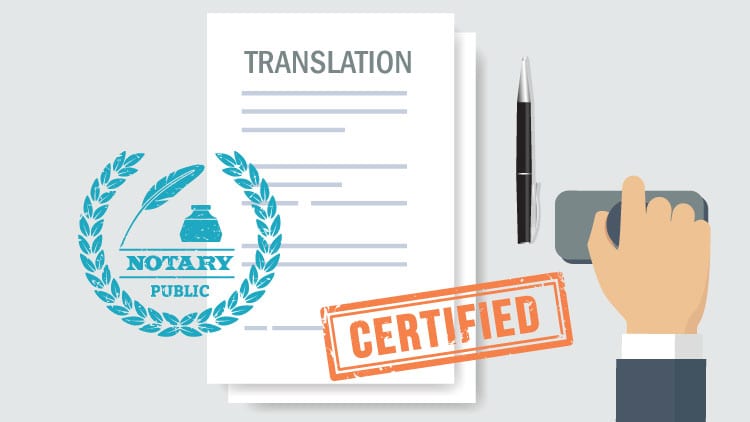
Note: For added authority, some clients choose to get translations notarized by a notary public or obtain an apostille (for Hague Convention countries).
Common Mistakes to Avoid
Submitting a certified translation when a sworn translation was required
Using a non‑recognized translator
Not including translator’s certification statement
Forgetting to apostille when needed
Ignoring country‑specific rules
Do You Need an Apostille?
Apostille is a separate authentication that makes documents valid across Hague Convention countries (including most of Europe). It is separate from translation but often required along with:
✔ Sworn translation
✔ Certified translation (for some purposes)
Ask your translation provider for guidance on whether an apostille certificate is also needed.
Costs & Timing
|
Service Type |
Typical Cost |
Time Required |
|
Sworn Translation |
Higher |
3–7 business days |
|
Certified Translation |
Moderate |
24–72 hours |
|
Notarization |
Additional |
+1–2 days |
|
Apostille |
Government fee |
Depends on office |
Costs vary by language, document type, and urgency.
Tips for International Students & Immigrants
Always check the specific document requirements of your destination country’s embassy or university.
Translate before submitting applications.
Ask translators for sample certificates and credentials.
Summary — What You Need to Remember
Sworn translation is legally binding and required for official legal purposes in most European countries.
Certified translation is a professional statement of accuracy, widely accepted for education, employment, and some administrative uses.
Requirements vary by country — always verify local rules.
Apostille and notarization are separate processes that may be required on top of translation.